
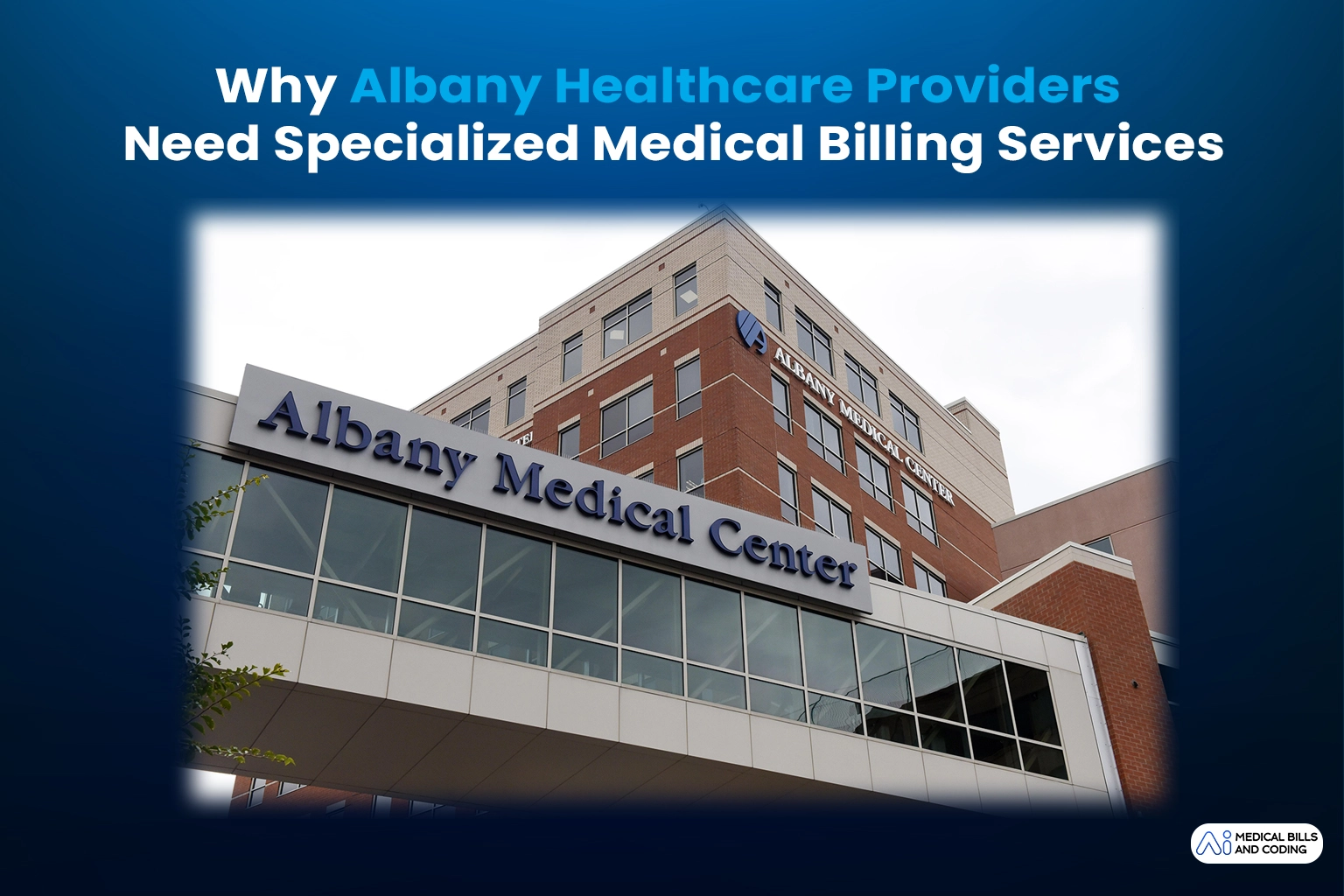
Introduction
The healthcare industry is constantly evolving, bringing new regulations, coding requirements, insurance policies, and reimbursement challenges. While healthcare providers focus on delivering quality patient care, managing the complexities of medical billing can become a significant burden. For healthcare providers in Albany, New York, efficient billing processes are essential not only for maintaining steady cash flow but also for ensuring compliance and maximizing reimbursements.
Medical billing is far more than simply submitting claims to insurance companies. It involves patient registration, insurance verification, coding accuracy, claim submission, payment posting, denial management, compliance monitoring, and revenue cycle optimization. Even a small error can lead to claim denials, delayed payments, or lost revenue.
This is why many healthcare organizations are turning to specialized medical billing services Albany, NY. These services are designed to handle the complexities of the revenue cycle while allowing providers to focus on patient care. Companies like AI Medical Bills have demonstrated how technology-driven solutions can help healthcare practices improve efficiency, reduce errors, and strengthen financial performance.
In this article, we will explore why healthcare providers in Albany need specialized medical billing services, the challenges they face, the benefits of outsourcing billing functions, and how modern billing solutions can transform healthcare revenue management.
Understanding Medical Billing in Modern Healthcare
Medical billing serves as the bridge between healthcare providers, patients, and insurance companies. Every healthcare service provided must be accurately documented, coded, and submitted for reimbursement.
The medical billing process generally includes:
- Patient registration
- Insurance eligibility verification
- Medical coding
- Charge entry
- Claim submission
- Payment posting
- Denial management
- Accounts receivable follow-up
- Patient billing
- Reporting and analytics
Although these steps may seem straightforward, each stage requires expertise and precision. A single coding mistake or missed deadline can result in payment delays or claim rejections.
Healthcare providers in Albany face the same challenges as providers nationwide, but regional payer requirements, state regulations, and growing patient expectations make specialized billing expertise even more important.
The Growing Challenges Facing Albany Healthcare Providers
Increasing Insurance Complexity
Insurance companies frequently update policies, reimbursement structures, and documentation requirements. Healthcare providers must stay informed about these changes to avoid claim denials.
Specialized medical billing teams continuously monitor payer updates and ensure claims meet current requirements before submission.
Regulatory Compliance Requirements
Healthcare organizations must comply with numerous regulations, including:
- HIPAA requirements
- CMS guidelines
- ICD-10 coding standards
- CPT coding updates
- State healthcare regulations
Failure to comply can result in audits, penalties, and revenue loss.
Rising Claim Denials
Claim denials continue to be one of the largest financial challenges for healthcare organizations. Common reasons include:
- Incorrect patient information
- Missing documentation
- Coding errors
- Authorization issues
- Eligibility problems
Without a dedicated billing team, denial rates can significantly impact practice revenue.
Staffing Challenges
Many healthcare organizations struggle to recruit and retain experienced billing professionals. Staff turnover can disrupt operations and create revenue cycle bottlenecks.
Specialized billing services Albany, NY eliminate staffing concerns by providing dedicated experts who manage billing functions consistently.
Administrative Burden
Physicians and office staff often spend valuable time dealing with billing-related tasks. This administrative workload reduces the time available for patient care and practice growth.
Why Specialized Medical Billing Services Matter
Expertise Beyond Basic Billing
General billing processes may work for some organizations, but specialized medical billing services provide deeper expertise in:
- Specialty-specific coding
- Insurance regulations
- Denial management
- Revenue cycle optimization
- Compliance monitoring
Healthcare providers benefit from industry knowledge that helps maximize reimbursement opportunities.
Improved Accuracy
Medical billing specialists understand the nuances of coding and claim submission. Their expertise significantly reduces errors that can lead to denials.
Accurate claims result in:
- Faster reimbursements
- Lower denial rates
- Reduced rework
- Improved cash flow
Revenue Optimization
Specialized billing services focus on maximizing revenue collection while minimizing losses.
Strategies include:
- Charge capture improvement
- Underpayment identification
- Denial prevention
- Appeals management
- Accounts receivable follow-up
These efforts help providers recover revenue that might otherwise be lost.
The Financial Impact of Inefficient Billing
Medical billing is much more than an administrative function—it is a critical component of a healthcare organization’s financial stability and long-term success. Every patient visit, procedure, diagnostic test, and treatment provided by a healthcare facility must be accurately documented, coded, and submitted for reimbursement. When billing processes are inefficient, healthcare providers can face a wide range of financial challenges that directly impact profitability, operational efficiency, and patient satisfaction.
In today’s increasingly complex healthcare environment, insurance regulations, coding requirements, and reimbursement policies continue to evolve. Even small billing errors can create significant disruptions in the revenue cycle. Whether it is a coding mistake, incomplete documentation, missed filing deadline, or insurance verification issue, inefficient billing practices can result in delayed payments, increased costs, lost revenue, and strained patient relationships.
For healthcare providers in Albany, NY, maintaining a healthy revenue cycle is essential to ensuring financial sustainability while continuing to deliver high-quality patient care. Understanding the true financial impact of billing inefficiencies highlights why many organizations are turning to specialized medical billing services and technology-driven solutions such as AI Medical Bills to optimize their billing operations.
Delayed Payments and Cash Flow Disruptions
One of the most immediate and noticeable consequences of inefficient billing is delayed reimbursement. Insurance companies require claims to be submitted accurately and in compliance with specific payer guidelines. If a claim contains errors, missing information, incorrect coding, or insufficient documentation, it may be denied, rejected, or placed on hold for further review.
When reimbursements are delayed, healthcare providers often face cash flow challenges that can affect the entire organization. While providers wait for payment, they must continue covering operational expenses such as employee salaries, rent, utilities, medical equipment, technology systems, and supply costs. Delays in reimbursement can create financial strain, particularly for small practices and independent healthcare providers that rely on consistent cash flow to maintain daily operations.
For example, if multiple claims are denied or delayed over several weeks, a healthcare practice may experience a significant reduction in incoming revenue. This can make it difficult to invest in staff training, facility improvements, or patient care initiatives. In some cases, providers may even need to utilize lines of credit or other financing options to bridge temporary cash flow gaps.
Specialized medical billing services Albany, NY help minimize these issues by implementing thorough claim review processes, insurance verification procedures, and coding audits before claims are submitted. This proactive approach helps improve clean claim rates and accelerates reimbursement timelines, ensuring a more predictable and stable revenue stream.
Increased Administrative Costs and Resource Utilization
Billing errors do not simply delay payments—they also increase the administrative workload associated with managing the revenue cycle. When a claim is denied or rejected, staff members must spend additional time investigating the issue, gathering supporting documentation, correcting errors, communicating with insurance companies, and resubmitting claims.
These tasks consume valuable resources that could otherwise be dedicated to patient care, operational improvements, or business growth initiatives. Administrative staff may spend countless hours on phone calls, appeals, follow-ups, and paperwork, resulting in decreased productivity across the organization.
In addition to labor costs, healthcare organizations often incur expenses related to:
- Ongoing billing staff training
- Compliance education
- Medical coding certification programs
- Revenue cycle management software
- Audit preparation and support
- Additional staffing requirements
As claim denial rates increase, so does the amount of time and money required to manage the billing process. Over the course of a year, these expenses can significantly impact a healthcare organization’s profitability.
Specialized medical billing providers Albany, NY offer access to experienced billing professionals who are trained to handle complex reimbursement issues efficiently. By outsourcing these responsibilities, healthcare organizations can reduce overhead costs while improving billing performance and operational efficiency.
Lost Revenue and Uncollected Reimbursements
Perhaps the most damaging consequence of inefficient billing is the loss of revenue that healthcare providers have rightfully earned. Every denied, underpaid, or overlooked claim represents potential income that may never be recovered.
In many healthcare organizations, denied claims are not always followed up on due to staffing limitations, competing priorities, or inadequate denial management processes. As a result, some claims remain unresolved until payer filing deadlines expire, making reimbursement impossible.
Common causes of revenue loss include:
- Incorrect diagnosis codes
- Improper procedure coding
- Missing prior authorizations
- Incomplete patient information
- Eligibility verification failures
- Duplicate claim submissions
- Insufficient medical documentation
- Missed appeal deadlines
While a single denied claim may appear insignificant, the cumulative impact can be substantial. Even a modest denial rate can result in thousands—or even hundreds of thousands—of dollars in lost revenue annually, depending on the size of the practice.
Furthermore, underpayments often go unnoticed when healthcare organizations lack effective payment monitoring systems. Insurance companies may reimburse claims at lower rates than contractually agreed upon, and without proper oversight, providers may never identify these discrepancies.
Specialized medical billing services focus on comprehensive denial management and reimbursement optimization. Dedicated billing professionals continuously monitor claims, identify revenue leakage opportunities, appeal denied claims, and ensure providers receive the payments they are entitled to. Companies such as AI Medical Bills utilize advanced analytics and automation tools to identify billing issues early, helping healthcare organizations maximize revenue recovery.
Reduced Patient Satisfaction and Experience
The impact of billing inefficiencies extends beyond financial performance and directly affects patient relationships. Patients increasingly expect healthcare organizations to provide accurate, transparent, and easy-to-understand billing experiences. When billing errors occur, patients may become frustrated, confused, and dissatisfied with the overall quality of service they receive.
Examples of billing-related issues that negatively affect patient satisfaction include:
- Incorrect invoices
- Duplicate charges
- Unexpected balances
- Delayed insurance processing
- Confusing billing statements
- Inaccurate payment calculations
Patients who encounter billing problems often spend significant time contacting providers, insurance companies, and billing departments to resolve issues. These interactions can create stress and frustration, diminishing trust in the healthcare organization.
In today’s competitive healthcare landscape, patient satisfaction plays a critical role in retention and reputation management. Negative billing experiences can lead to poor online reviews, reduced patient loyalty, and decreased referrals. Even when clinical care is exceptional, billing frustrations may overshadow the overall patient experience.
Specialized medical billing services help improve patient satisfaction by ensuring greater billing accuracy, faster claim processing, and clearer communication regarding financial responsibilities. A streamlined billing process contributes to a more positive patient journey and strengthens trust between providers and patients.
How Specialized Medical Billing Services Improve Revenue Cycle Management
Revenue Cycle Management (RCM) encompasses every financial interaction from patient registration to final payment collection.
Insurance Verification
Verifying insurance coverage before appointments helps prevent eligibility-related claim denials.
Benefits include:
- Reduced claim rejections
- Improved patient communication
- Accurate payment expectations
Accurate Medical Coding
Coding errors remain one of the most common causes of claim denials.
Specialized billing teams ensure:
- Accurate diagnosis coding
- Proper procedure coding
- Updated coding compliance
- Thorough documentation review
Clean Claim Submission
A clean claim is one that passes through the payer system without errors.
Specialized medical billing services prioritize clean claim rates through:
- Automated validation checks
- Coding audits
- Documentation reviews
Denial Management
Denial management is critical for recovering lost revenue.
Billing specialists:
- Identify denial trends
- Correct claim errors
- Submit appeals
- Monitor outcomes
Accounts Receivable Follow-Up
Outstanding claims require consistent monitoring and follow-up.
Dedicated billing teams ensure:
- Faster collections
- Reduced aging accounts
- Improved cash flow
The Role of Technology in Modern Medical Billing
Technology has transformed the medical billing landscape.
Automation
Automation helps reduce manual work by streamlining:
- Claim submission
- Payment posting
- Eligibility verification
- Reporting
Artificial Intelligence
AI-powered billing systems analyze large volumes of data and identify potential billing issues before claims are submitted.
Organizations such as AI Medical Bills are helping healthcare providers leverage advanced technology to improve billing accuracy, reduce denials, and optimize reimbursement processes.
AI-driven systems can:
- Detect coding inconsistencies
- Predict denial risks
- Automate workflows
- Improve claim accuracy
Real-Time Reporting
Advanced reporting tools provide valuable insights into:
- Revenue performance
- Denial trends
- Collection rates
- Financial health
Healthcare providers can make informed decisions based on accurate data.
Why Albany Healthcare Providers Benefit from Localized Expertise
Albany healthcare providers operate within a unique healthcare environment that includes:
- Regional insurance carriers
- New York State regulations
- Diverse patient populations
- Competitive healthcare markets
Specialized billing services understand these local dynamics and can tailor solutions accordingly.
Knowledge of Regional Payers
Billing specialists familiar with Albany and New York healthcare systems understand payer-specific requirements and reimbursement patterns.
State Compliance Awareness
New York healthcare regulations continue to evolve. Specialized billing providers stay current with compliance requirements to reduce risk.
Support for Diverse Practice Types
Albany healthcare providers include:
- Primary care practices
- Specialty clinics
- Urgent care centers
- Behavioral health providers
- Physical therapy clinics
- Multi-specialty groups
Each specialty requires unique billing expertise.
Specialty-Specific Billing Requirements
Primary Care Practices
Primary care providers manage high patient volumes and diverse service offerings.
Specialized billing services help ensure:
- Accurate preventive care coding
- Chronic care management billing
- Annual wellness visit reimbursement
Behavioral Health Providers
Behavioral health billing often involves:
- Complex authorization requirements
- Time-based coding
- Telehealth billing regulations
Specialized expertise is essential for maximizing reimbursements.
Physical Therapy Clinics
Physical therapy billing requires:
- Detailed documentation
- Timed procedure coding
- Compliance with therapy caps and payer rules
Surgical Practices
Surgical billing involves:
- Global periods
- Modifier usage
- Bundling regulations
Specialized billing professionals help prevent costly mistakes.
Common Medical Billing Mistakes That Cost Providers Money
Medical billing is one of the most critical components of a healthcare organization’s revenue cycle. Every claim submitted to an insurance company represents revenue that healthcare providers have earned through patient care. However, even minor mistakes during the billing process can result in claim denials, delayed payments, increased administrative costs, and significant revenue loss. In many cases, these errors are entirely preventable, yet they continue to impact healthcare organizations of all sizes.
As healthcare regulations, insurance requirements, and coding standards become increasingly complex, the risk of billing mistakes grows. Without proper processes and oversight, providers may unknowingly lose thousands of dollars each year due to avoidable errors. For healthcare providers in Albany, NY, maintaining accurate and efficient billing practices is essential to sustaining profitability and ensuring long-term financial stability.
Understanding the most common medical billing mistakes can help healthcare organizations identify weaknesses in their revenue cycle and implement solutions that improve reimbursement outcomes. Specialized medical billing services and technology-driven solutions such as AI Medical Bills play a vital role in preventing these costly errors and optimizing revenue performance.
Incorrect Patient Information
One of the most common and frequently overlooked billing mistakes involves inaccurate patient information. While entering patient details may seem like a simple administrative task, even minor errors can have serious financial consequences.
Common patient information errors include:
- Misspelled names
- Incorrect dates of birth
- Invalid insurance policy numbers
- Outdated addresses
- Wrong member identification numbers
- Missing demographic information
Insurance companies rely on accurate patient data to process claims. If any information does not match the insurer’s records, the claim may be rejected immediately or delayed for additional verification. These delays can extend reimbursement timelines and increase administrative workloads as staff members work to correct and resubmit claims.
For example, a single digit entered incorrectly in a patient’s insurance identification number can result in a claim denial that requires hours of follow-up and correction. When these errors occur repeatedly, they can create significant disruptions to cash flow and revenue cycle performance.
Specialized medical billing services Albany, NY help reduce patient information errors through rigorous verification procedures, automated validation tools, and comprehensive registration processes. By ensuring data accuracy from the beginning, healthcare organizations can improve claim acceptance rates and accelerate reimbursement.
Coding Errors
Medical coding serves as the foundation of the billing process. Every diagnosis, treatment, procedure, and service provided must be translated into standardized codes that communicate medical information to insurance companies.
Unfortunately, coding errors remain one of the leading causes of claim denials and revenue loss. Even highly experienced healthcare organizations can encounter coding challenges due to the complexity of modern coding systems.
Common coding mistakes include:
- Using incorrect diagnosis codes
- Selecting inappropriate procedure codes
- Missing required modifiers
- Upcoding or undercoding services
- Failing to update codes based on annual revisions
- Coding services without sufficient documentation
When diagnosis and procedure codes do not accurately reflect the care provided, insurance companies may reject claims or request additional information before processing payment. Coding errors can also increase compliance risks and expose providers to audits or penalties.
For specialty practices, coding complexities become even more significant. Specialties such as cardiology, orthopedics, behavioral health, physical therapy, and surgery often require advanced coding expertise to ensure accurate reimbursement.
Specialized medical billing professionals stay current with ICD-10, CPT, and HCPCS coding updates, helping healthcare providers avoid coding-related denials while maximizing reimbursement opportunities. Solutions such as AI Medical Bills utilize advanced analytics to identify potential coding inconsistencies before claims are submitted, reducing the likelihood of costly errors.
Missing or Incomplete Documentation
Accurate documentation is essential for supporting medical necessity and validating services billed to insurance companies. Even when coding is correct, claims may be denied if supporting documentation is incomplete, unclear, or insufficient.
Documentation-related issues commonly include:
- Missing physician notes
- Incomplete treatment records
- Lack of medical necessity documentation
- Unsigned patient records
- Missing test results
- Inadequate procedure details
Insurance companies frequently require detailed documentation to justify reimbursement. If the documentation does not adequately support the diagnosis or procedure code submitted, the payer may deny the claim or request additional information.
Incomplete documentation not only delays reimbursement but also increases the administrative burden associated with appeals and resubmissions. Staff members must spend additional time gathering records, communicating with providers, and responding to payer requests.
Healthcare organizations that implement strong documentation practices experience fewer denials and faster reimbursement cycles. Specialized billing services work closely with providers to ensure documentation meets payer requirements and supports accurate claim submission.
Failure to Verify Insurance Eligibility
Insurance verification is one of the most important steps in the revenue cycle, yet it is often overlooked or performed inadequately. Verifying insurance coverage before services are rendered helps identify potential issues that could impact reimbursement.
Common insurance verification problems include:
- Expired coverage
- Incorrect insurance plans
- Unmet deductibles
- Coverage exclusions
- Authorization requirements
- Changes in patient eligibility
When eligibility is not verified in advance, providers may discover coverage issues only after submitting a claim. At that point, reimbursement delays and claim denials become much more likely.
For example, a patient may present an insurance card that appears valid, but their coverage may have terminated or changed since their last visit. Without proper verification, services may be provided under the assumption of active coverage, leading to unexpected denials and collection challenges.
Insurance eligibility issues remain one of the most common causes of denied claims across the healthcare industry. Specialized medical billing services utilize automated verification tools and payer communication systems to confirm coverage details before appointments occur. This proactive approach significantly reduces eligibility-related denials and improves revenue cycle efficiency.
Missed Filing Deadlines
Every insurance company establishes specific timeframes for claim submission. These deadlines, known as timely filing limits, vary by payer and plan type. Failure to submit claims within the required period can result in automatic claim rejection and permanent revenue loss.
Common causes of missed filing deadlines include:
- Administrative backlogs
- Incomplete documentation
- Delayed coding processes
- Staffing shortages
- Workflow inefficiencies
- Lack of claim tracking systems
Unlike many other billing errors, missed filing deadlines often cannot be corrected through appeals or resubmissions. Once a payer’s filing window closes, reimbursement may no longer be available regardless of the validity of the claim.
For healthcare organizations handling high claim volumes, tracking filing deadlines across multiple insurance carriers can be challenging. Missing just a few deadlines each month can accumulate into substantial annual revenue losses.
Specialized medical billing providers implement robust claim monitoring systems that track submission deadlines, identify outstanding claims, and ensure timely filing. These processes help protect healthcare organizations from preventable revenue loss and improve overall reimbursement performance.
Outsourcing vs. In-House Billing
Many Albany healthcare providers face the decision of whether to manage billing internally or outsource to specialists.
In-House Billing Challenges
- Staffing shortages
- Training costs
- Software expenses
- Compliance risks
- Employee turnover
Benefits of Outsourcing
- Access to experienced professionals
- Reduced operational costs
- Improved claim accuracy
- Better denial management
- Enhanced revenue performance
Outsourcing allows providers to focus on delivering exceptional patient care while experts handle revenue cycle management.
How AI Medical Bills Supports Healthcare Providers
As healthcare billing becomes increasingly complex, technology-driven solutions are becoming essential.
AI Medical Bills represents the growing trend toward intelligent billing support that combines human expertise with advanced automation.
Key advantages include:
- Improved claim accuracy
- Reduced administrative burden
- Faster reimbursements
- Enhanced denial prevention
- Revenue cycle optimization
Healthcare providers seeking specialized medical billing services for healthcare providers Albany, NY can benefit from solutions that leverage both industry expertise and innovative technology.
The Future of Medical Billing in Albany
The healthcare industry is undergoing a rapid transformation, and medical billing is evolving alongside it. As healthcare providers in Albany, NY continue to navigate changing regulations, complex payer requirements, and increasing patient expectations, the importance of efficient and technology-driven billing processes has never been greater. Traditional billing methods that rely heavily on manual processes are gradually being replaced by smarter, more automated solutions designed to improve accuracy, reduce administrative burdens, and maximize revenue.
The future of medical billing will be shaped by advancements in artificial intelligence, automation, data analytics, telehealth expansion, and regulatory compliance technologies. Healthcare providers that embrace these innovations will be better positioned to improve financial performance, enhance operational efficiency, and deliver a superior patient experience.
For organizations seeking specialized medical billing services for healthcare providers Albany, NY, understanding these emerging trends can help them prepare for the next generation of revenue cycle management.
Increased AI Adoption
Artificial Intelligence (AI) is expected to become one of the most influential technologies in the future of medical billing. Healthcare organizations are increasingly adopting AI-powered solutions to streamline billing workflows, reduce human error, and improve reimbursement outcomes.
Traditional billing processes often involve repetitive administrative tasks that are time-consuming and prone to mistakes. AI systems can analyze vast amounts of billing data in real time, identifying patterns and detecting potential issues before claims are submitted to insurance companies. This proactive approach helps reduce claim denials and accelerates payment processing.
AI technologies can support medical billing operations in several ways, including:
- Automated claim validation
- Coding accuracy verification
- Denial prediction and prevention
- Revenue cycle analysis
- Insurance eligibility verification
- Fraud detection and compliance monitoring
- Payment trend forecasting
One of the most significant advantages of AI is its ability to continuously learn and improve. As systems process more billing data, they become increasingly effective at identifying risk factors and optimizing workflows.
Companies such as AI Medical Bills are already demonstrating how artificial intelligence can transform revenue cycle management. By combining advanced analytics with billing expertise, AI Medical Bills helps healthcare providers improve claim accuracy, reduce denials, and enhance overall financial performance.
As AI technology continues to evolve, Albany healthcare providers can expect even greater efficiency, faster reimbursement cycles, and more informed financial decision-making.
Greater Automation Across Revenue Cycle Processes
Automation is another major trend shaping the future of medical billing. Healthcare organizations are increasingly seeking ways to reduce administrative workloads and eliminate repetitive manual tasks that consume valuable staff time.
Modern billing platforms can automate many aspects of the revenue cycle, including:
- Patient registration workflows
- Insurance verification
- Claim generation and submission
- Payment posting
- Appointment reminders
- Patient billing communications
- Accounts receivable follow-up
- Revenue reporting
By automating routine tasks, healthcare organizations can significantly reduce processing times while improving accuracy and consistency. Automation also helps minimize the risk of human error, which remains one of the leading causes of claim denials and delayed payments.
For example, automated insurance verification systems can instantly confirm patient coverage before appointments, helping prevent eligibility-related denials. Similarly, automated claim scrubbing tools can identify coding errors and missing information before claims are submitted.
As automation technologies become more sophisticated, healthcare providers in Albany will be able to manage larger claim volumes with fewer administrative resources. This increased efficiency allows staff members to focus on higher-value activities, such as patient engagement and strategic business initiatives.
Enhanced Data Analytics and Revenue Intelligence
Data is becoming one of the most valuable assets in healthcare revenue cycle management. Future medical billing systems will leverage advanced analytics tools to provide deeper insights into financial performance, reimbursement trends, and operational efficiency.
Historically, many healthcare organizations relied on basic financial reports that provided limited visibility into billing performance. Modern analytics platforms offer far more comprehensive insights by transforming raw billing data into actionable intelligence.
Advanced reporting tools can help providers monitor:
- Claim acceptance rates
- Denial trends
- Accounts receivable performance
- Revenue collection rates
- Payer reimbursement patterns
- Coding accuracy metrics
- Patient payment behavior
- Practice profitability
These insights enable healthcare organizations to identify potential problems before they become significant financial challenges. For example, analytics may reveal that a particular payer has a higher denial rate than others, allowing billing teams to investigate and implement corrective measures.
Predictive analytics will play an increasingly important role in future revenue cycle management. By analyzing historical billing data, AI-powered systems can forecast reimbursement trends, predict denial risks, and identify opportunities to improve revenue performance.
Organizations that leverage advanced data analytics will gain a competitive advantage through better decision-making, stronger financial planning, and more effective resource allocation.
Expanded Telehealth Billing Requirements
The rapid growth of telehealth services has permanently changed the healthcare landscape. Patients increasingly value the convenience, accessibility, and flexibility offered by virtual care options. As telehealth adoption continues to expand, billing requirements will become more complex and specialized.
Telehealth billing differs from traditional in-person billing in several important ways, including:
- Specific telehealth procedure codes
- Virtual service modifiers
- Place-of-service requirements
- Payer-specific reimbursement rules
- State licensing considerations
- Documentation standards
Insurance companies frequently update telehealth policies, making it essential for providers to stay informed about changing requirements. Failure to comply with telehealth billing guidelines can result in claim denials, delayed payments, and compliance risks.
As virtual healthcare becomes more integrated into routine patient care, specialized billing expertise will become increasingly important. Medical billing partners will need to stay current with evolving telehealth regulations while ensuring accurate coding and documentation practices.
Healthcare providers in Albany that offer telehealth services will benefit from billing solutions that can adapt quickly to changing payer policies and reimbursement models.
Stronger Compliance Monitoring and Regulatory Oversight
Healthcare regulations continue to evolve at both the federal and state levels. As billing requirements become more complex, compliance monitoring will become an even more critical component of revenue cycle management.
Healthcare organizations must comply with numerous regulations and standards, including:
- HIPAA privacy and security requirements
- Medicare and Medicaid billing regulations
- ICD-10 coding standards
- CPT coding updates
- Fraud and abuse prevention laws
- State healthcare regulations
- Insurance payer policies
Failure to maintain compliance can result in audits, payment recoupments, financial penalties, and reputational damage. As regulatory scrutiny increases, healthcare providers will need more sophisticated tools and expertise to navigate these challenges effectively.
Future billing systems will utilize AI-driven compliance monitoring tools capable of identifying potential risks before claims are submitted. These systems can automatically flag coding inconsistencies, documentation deficiencies, and regulatory concerns, helping organizations avoid costly mistakes.
Specialized medical billing services will continue to play a crucial role in ensuring compliance. Experienced billing professionals monitor industry updates, implement regulatory changes, and provide ongoing guidance that helps healthcare providers reduce risk while maintaining optimal reimbursement performance.
Choosing the Right Specialized Medical Billing Partner
Selecting a medical billing partner is one of the most important decisions a healthcare organization can make. Medical billing directly impacts cash flow, revenue generation, compliance, patient satisfaction, and overall operational efficiency. As healthcare billing becomes increasingly complex, providers need more than just a company that submits claims—they need a strategic partner capable of optimizing the entire revenue cycle.
For healthcare providers in Albany, NY, choosing the right specialized medical billing service can mean the difference between consistent financial growth and ongoing revenue challenges. The ideal billing partner should possess deep industry knowledge, advanced technology capabilities, regulatory expertise, and a commitment to delivering measurable results.
With numerous billing companies available in the market, healthcare organizations must carefully evaluate potential partners to ensure they align with their operational goals and financial objectives. Below are the key factors every provider should consider when selecting a specialized medical billing partner.
Industry Experience
One of the first and most important factors to evaluate is industry experience. Medical billing is a highly specialized field that requires a thorough understanding of healthcare regulations, insurance requirements, coding systems, and reimbursement processes.
An experienced billing partner brings valuable expertise gained from working with healthcare organizations across various specialties and payer environments. Their familiarity with industry best practices enables them to identify potential issues before they become costly problems.
When assessing industry experience, healthcare providers should consider:
- Number of years in operation
- Experience with healthcare revenue cycle management
- Knowledge of Medicare and Medicaid billing
- Familiarity with commercial insurance carriers
- Track record of improving reimbursement performance
- Success in reducing claim denials
Experienced billing providers understand the complexities of the healthcare reimbursement landscape and can implement proven strategies that maximize revenue while minimizing administrative burdens.
Additionally, established billing companies are often better equipped to adapt to changing regulations and payer policies, ensuring continuity and stability for healthcare organizations.
Specialty Knowledge
Not all medical billing is the same. Different medical specialties have unique coding requirements, documentation standards, reimbursement rules, and compliance considerations. A billing company that excels in one specialty may not necessarily have the expertise needed to support another.
For example:
- Primary care practices have different billing requirements than surgical centers.
- Behavioral health providers must navigate complex authorization and documentation rules.
- Physical therapy clinics often rely on time-based coding and treatment modifiers.
- Cardiology practices may require advanced knowledge of diagnostic and procedural coding.
- Orthopedic providers frequently deal with surgical billing complexities and global periods.
Choosing a billing partner with experience in your specific specialty can significantly improve billing accuracy and reimbursement outcomes.
A specialized billing provider understands:
- Specialty-specific coding guidelines
- Common denial reasons within the specialty
- Documentation requirements
- Payer reimbursement trends
- Regulatory considerations
This expertise helps reduce errors, improve claim acceptance rates, and maximize revenue opportunities.
Healthcare providers should ask potential billing partners about their experience supporting organizations similar to their own and request examples of measurable results achieved within their specialty.
Technology Capabilities
Technology has become a critical component of modern medical billing. The most effective billing partners leverage advanced tools and software to streamline processes, improve accuracy, and provide valuable financial insights.
Healthcare organizations should evaluate whether a billing provider utilizes modern technology solutions such as:
- Automated claim scrubbing
- Electronic claim submission
- Real-time eligibility verification
- Revenue cycle analytics
- Denial management systems
- Automated payment posting
- Cloud-based reporting platforms
- Patient billing portals
Advanced technology can significantly improve billing efficiency while reducing the likelihood of human error.
Artificial intelligence and automation are becoming increasingly important in revenue cycle management. Companies such as AI Medical Bills utilize intelligent billing technologies that help identify claim issues before submission, predict denial risks, and optimize reimbursement performance.
When evaluating technology capabilities, providers should also consider:
- System integration with existing EHR platforms
- Reporting functionality
- Data security measures
- User accessibility
- Scalability for future growth
A technologically advanced billing partner can provide greater visibility into financial performance while helping organizations stay competitive in an increasingly digital healthcare environment.
Compliance Expertise
Healthcare billing is governed by a complex and constantly evolving regulatory framework. Failure to comply with billing regulations can result in claim denials, payment recoupments, audits, financial penalties, and reputational damage.
A reliable medical billing partner should demonstrate a strong commitment to compliance and regulatory oversight.
Areas of compliance expertise should include:
- HIPAA requirements
- Medicare and Medicaid regulations
- ICD-10 coding standards
- CPT and HCPCS updates
- Fraud and abuse prevention guidelines
- State healthcare regulations
- Insurance payer requirements
Because regulations frequently change, billing providers must maintain ongoing education and compliance monitoring programs.
Healthcare organizations should inquire about:
- Compliance training procedures
- Internal audit processes
- Quality assurance programs
- Regulatory update protocols
- Risk management strategies
A billing partner with strong compliance expertise helps protect healthcare organizations from costly mistakes while ensuring claims are submitted accurately and ethically.
Transparency and Reporting
Transparency is essential when outsourcing medical billing functions. Healthcare providers need clear visibility into the performance of their revenue cycle and confidence that their billing partner is operating effectively.
A trustworthy billing provider should offer comprehensive reporting that allows organizations to monitor key performance indicators and financial outcomes.
Important reporting metrics may include:
- Claim acceptance rates
- Denial percentages
- Net collection rates
- Days in accounts receivable
- Revenue trends
- Payment turnaround times
- Outstanding claim balances
- Collection performance
Transparent reporting enables healthcare providers to evaluate the effectiveness of billing operations and identify opportunities for improvement.
Providers should avoid billing companies that offer limited visibility into their processes or fail to provide regular performance updates. Open communication and data-driven reporting are critical components of a successful billing partnership.
The best billing partners function as an extension of the healthcare organization, sharing performance insights and working collaboratively to achieve financial goals.
Customer Support and Communication
Medical billing is an ongoing process that requires consistent communication and collaboration. Even the most advanced billing systems cannot replace the value of responsive customer support and strong professional relationships.
Healthcare organizations should prioritize billing partners that offer:
- Dedicated account managers
- Prompt response times
- Regular performance reviews
- Clear communication channels
- Proactive issue resolution
- Ongoing consultation and support
Billing issues often require immediate attention, particularly when dealing with claim denials, payer disputes, or regulatory concerns. Delays in communication can lead to prolonged reimbursement delays and lost revenue opportunities.
Strong customer support ensures that healthcare providers receive timely assistance when challenges arise and helps foster a productive long-term partnership.
When evaluating customer service, providers should ask:
- Who will serve as the primary point of contact?
- How quickly are inquiries addressed?
- What support channels are available?
- How frequently are performance meetings conducted?
A billing partner that prioritizes communication demonstrates a commitment to client success and continuous improvement.
Measuring Success with Specialized Medical Billing Services
Healthcare providers should track key performance indicators such as:
- Clean claim rate
- First-pass acceptance rate
- Denial rate
- Days in accounts receivable
- Net collection rate
- Revenue growth
These metrics help measure the effectiveness of billing operations and identify improvement opportunities.
Conclusion
The healthcare industry is becoming increasingly complex, and medical billing has evolved into a highly specialized function that requires expertise, precision, and continuous adaptation to changing regulations and payer requirements. For healthcare providers in Albany, NY, managing medical billing effectively is no longer just about submitting claims and collecting payments—it is about ensuring financial stability, maintaining compliance, optimizing revenue cycles, and creating a seamless experience for patients.
Healthcare organizations today face numerous challenges, including rising claim denial rates, evolving insurance policies, complex coding requirements, staffing shortages, and growing administrative responsibilities. These challenges can place a significant burden on providers who are already focused on delivering high-quality patient care. Without the proper resources and expertise, billing inefficiencies can quickly lead to delayed reimbursements, increased operational costs, compliance risks, and substantial revenue loss.
As the healthcare landscape continues to evolve, the importance of specialized medical billing services Albany, NY has never been greater. Professional billing partners bring industry knowledge, advanced technology, and dedicated revenue cycle management expertise that help healthcare organizations navigate these challenges more effectively. By ensuring accurate coding, timely claim submission, thorough insurance verification, proactive denial management, and ongoing compliance monitoring, specialized billing services help providers maximize reimbursements while reducing administrative burdens.
In addition to improving financial performance, specialized medical billing services enable healthcare organizations to focus more of their time and resources on what matters most—patient care. When providers are no longer overwhelmed by billing complexities, they can dedicate greater attention to improving patient outcomes, expanding services, and enhancing the overall healthcare experience.
Technology is also playing an increasingly important role in the future of medical billing. Advanced solutions powered by artificial intelligence, automation, and data analytics are transforming the way healthcare organizations manage their revenue cycles. Companies like AI Medical Bills are helping providers embrace these innovations by offering intelligent billing solutions that improve accuracy, accelerate reimbursements, reduce claim denials, and provide valuable financial insights. By combining cutting-edge technology with experienced billing professionals, AI Medical Bills empowers healthcare organizations to achieve greater efficiency and stronger financial results.
Furthermore, as telehealth services expand, regulatory requirements evolve, and patient expectations continue to rise, healthcare providers need billing partners who can adapt to changing industry demands. Specialized medical billing services offer the flexibility, scalability, and expertise necessary to support long-term growth while maintaining compliance and operational excellence.
For healthcare organizations seeking specialized medical billing services for healthcare providers Albany, NY, partnering with an experienced and technology-driven billing provider is no longer simply a way to reduce administrative workload—it is a strategic business decision. The right billing partner can help strengthen cash flow, improve revenue recovery, minimize financial risks, enhance patient satisfaction, and create a more sustainable foundation for future success.
In an increasingly competitive healthcare environment, organizations that invest in professional revenue cycle management solutions will be better positioned to thrive. By leveraging specialized expertise and innovative solutions from providers like AI Medical Bills, healthcare organizations can transform their billing operations from a routine administrative function into a powerful driver of financial growth, operational efficiency, and long-term success. Ultimately, effective medical billing is not just about collecting payments—it is about supporting the overall health and sustainability of the healthcare organization itself.
Frequently Asked Questions
1. What are specialized medical billing services?
Specialized medical billing services are professional revenue cycle management solutions designed to help healthcare providers handle insurance claims, medical coding, payment posting, denial management, patient billing, and compliance requirements. These services ensure accurate claim submission, faster reimbursements, and improved financial performance for healthcare organizations.
2. Why do healthcare providers in Albany, NY need specialized medical billing services?
Healthcare providers in Albany face increasing challenges such as complex insurance requirements, evolving healthcare regulations, claim denials, and administrative burdens. Specialized medical billing services help providers improve reimbursement rates, reduce billing errors, maintain compliance, and focus more on patient care rather than administrative tasks.
3. How can medical billing services improve revenue cycle management?
Medical billing services optimize every stage of the revenue cycle, including insurance verification, coding, claim submission, payment posting, accounts receivable management, and denial resolution. By improving efficiency and reducing errors, providers can accelerate reimbursements and increase overall revenue collection.
4. What are the most common causes of medical claim denials?
Some of the most common reasons for claim denials include:
- Incorrect patient information
- Coding errors
- Missing documentation
- Insurance eligibility issues
- Lack of prior authorization
- Duplicate claim submissions
- Missed filing deadlines
Specialized billing services help identify and prevent these issues before claims are submitted.
5. How does AI Medical Bills help healthcare providers improve billing performance?
AI Medical Bills utilizes advanced technology, automation, and industry expertise to streamline medical billing operations. Its solutions help healthcare providers improve claim accuracy, reduce denial rates, automate repetitive tasks, enhance compliance monitoring, and maximize reimbursements through intelligent revenue cycle management.
6. Is outsourcing medical billing more cost-effective than managing billing in-house?
For many healthcare organizations, outsourcing medical billing can be more cost-effective than maintaining an in-house billing department. Outsourcing reduces expenses related to staffing, training, software, compliance management, and administrative overhead while providing access to experienced billing professionals and advanced technology.
7. How do specialized billing services ensure compliance with healthcare regulations?
Specialized billing providers stay updated on healthcare regulations, coding standards, payer requirements, and industry best practices. They implement compliance-focused processes, conduct regular audits, monitor regulatory changes, and ensure claims are submitted according to current guidelines to reduce the risk of penalties and audits.
8. Can specialized medical billing services support different healthcare specialties?
Yes. Many specialized medical billing companies provide customized billing solutions for various healthcare specialties, including:
- Primary Care
- Cardiology
- Orthopedics
- Behavioral Health
- Physical Therapy
- Dermatology
- Internal Medicine
- Urgent Care
- Pediatrics
- Multi-Specialty Practices
Specialty-specific expertise helps improve coding accuracy and reimbursement outcomes.
9. How does technology impact modern medical billing?
Modern medical billing relies heavily on technology to improve efficiency and accuracy. Advanced tools such as artificial intelligence, automation, analytics, and electronic claim submission systems help reduce manual errors, identify denial risks, streamline workflows, and provide valuable financial insights for healthcare providers.
10. What should healthcare providers look for when choosing a medical billing partner?
When selecting a specialized medical billing provider, healthcare organizations should evaluate:
- Industry experience
- Specialty-specific expertise
- Technology capabilities
- Compliance knowledge
- Denial management processes
- Transparency and reporting
- Customer support quality
- Revenue cycle performance track record
“Take your practice’s financial performance to the next level. AI Medical Bills provides reliable, accurate, and efficient medical billing solutions tailored to your specialty. Get started today. ”